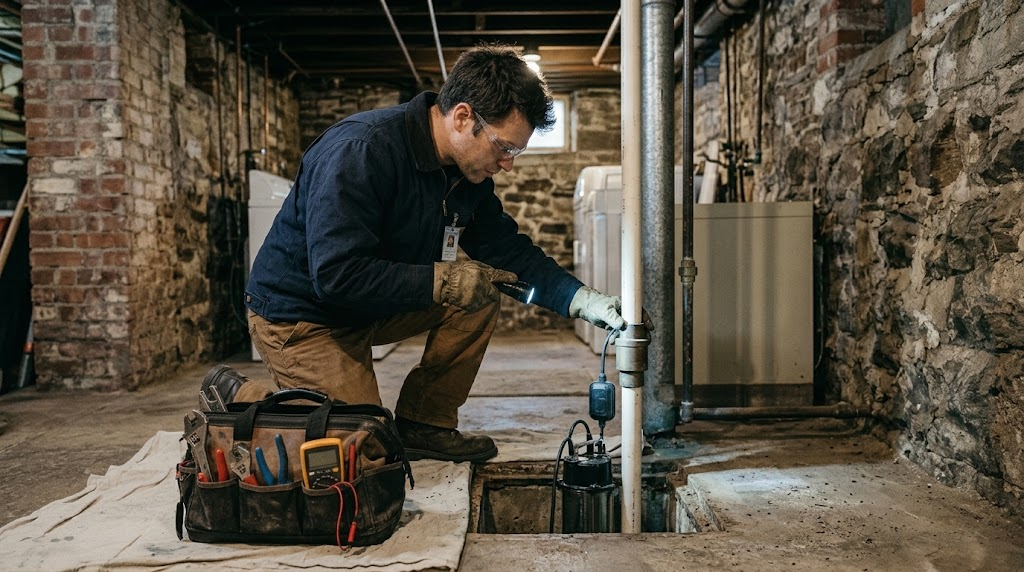
Basement Flood Defense in Stapleton, Staten Island
Stapleton's unique topography poses distinct hydrodynamic challenges for property owners. Nestled between the steep elevations of Grymes Hill and the coastal frontage along Upper New York Bay, storm runoff naturally migrates downward into foundation soils. Properties along Bay Street, lower Van Duzer Street, and adjacent avenues frequently encounter high water tables, coastal tidal surges, and intense storm runoff during nor'easters and torrential summer rainstorms.
When groundwater pressure builds around basement foundation slabs, an engineered sump pump system serves as your home's primary line of defense. NY Plumbing installs, repairs, and optimizes robust sump pump systems and backwater valves designed to protect valuable heating equipment, electrical systems, and finished living spaces from catastrophic moisture damage.
Common Sump Pump Symptoms and Failure Indicators
A failing sump pump often provides subtle warning signs before complete breakdown during a severe storm event. Watch for these indicators:
Continuous Motor Operation
If the pump continues running even when the pit water level is low, the vertical float switch may be pinned, the check valve may be leaking backward, or internal impellers may be severely worn.
Excessive Vibration or Grinding
Harsh metallic screeching or violent shuddering indicates gravel or debris jammed in the bottom volute, a bent drive shaft, or worn motor bearings nearing total seizure.
Slow Pumping Discharge
When the pump motor hums with normal pitch but water levels in the basin fail to recede rapidly, the exterior discharge line may be restricted, iced over, or choked with sediment.
Failure to Engage on High Water
If water rises above the basin rim while the pump remains silent, a tripped circuit breaker, burned motor winding, or disconnected tether switch requires immediate professional intervention.
Battery Backup Sump Pump Systems
The greatest threat to basement waterproofing is that severe storms and torrential cloudbursts frequently cause municipal power blackouts. When the electrical grid drops, standard 120V AC sump pumps become completely inert at the exact moment groundwater ingress is most severe.
We install comprehensive dual-pump systems featuring a heavy-duty primary cast iron pump paired with an independent DC battery backup pump. The secondary unit incorporates:
- Automated Emergency Activation: The backup pump engages automatically if utility electrical power fails or if the primary pump cannot keep pace with extreme inflow volume.
- Deep-Cycle Marine Batteries: Maintenance-free AGM deep-cycle battery banks provide sustained multi-day pumping cycles during prolonged regional power outages.
- Smart Monitoring & Audible Alarms: Digital chargers continuously monitor battery health, alerting property owners with audible tones if charging faults or pump duty events occur.
- Dedicated Dual Check Valves: Independent check valves prevent backflow contamination between the primary and backup discharge assemblies.
The Critical Purpose of Backwater Valves
Many property owners confuse sump pumps with backwater valves. While a sump pump manages clean subsurface groundwater seepage through weeping tiles, a sanitary backwater valve is installed directly into your main sewer drainage line. When torrential storm runoff overwhelms municipal storm-sewer networks, the street line pressurizes and pushes raw sewage backward toward homes. An automatic backwater flap instantly seals shut under reverse pressure, preventing sewage backups from entering basement fixtures.
Sump Pit Rehabilitation & Discharge Line Maintenance
A reliable sump pump installation requires more than dropping equipment into an open hole. Long-term reliability depends upon engineered basin architecture:
- Perforated Structural Basins: High-density polyethylene basins wrapped in geo-textile drainage fabric filter out silt and fine sand while collecting subsurface perimeter drainage.
- Sealed Airtight Pit Lids: Gasket-sealed access covers block radon gas, humid basement odors, and moisture vapor from migrating into living areas, while keeping debris from fouling the float switch.
- Spring-Loaded Quiet Check Valves: Eliminates the harsh "water hammer" clunk each time the pump finishes a pumping cycle, prolonging PVC joint lifespan and maintaining peace in the home.
- Proper Exterior Gravity Grading: Discharge piping must carry pumped water a minimum of 10 to 20 feet away from foundation walls to prevent water from recirculating right back through foundation soils.
Factors Affecting Pump Selection and Installation Scope
Selecting the right sump pump equipment for a Stapleton building depends on key mechanical parameters:
- Total Dynamic Head (TDH): The vertical lift height from the pit floor to the overhead discharge rim, plus friction loss across elbows and piping runs, determines whether a 1/3 HP, 1/2 HP, or 3/4 HP pump is technically required.
- Water Inflow Velocity: Low-lying coastal properties near Bay Street require higher-capacity gallons-per-hour (GPH) ratings than hillside buildings with moderate seepage.
- Electrical Infrastructure: Ensuring dedicated 15A or 20A GFCI circuits exist directly adjacent to the sump basin prevents nuisance breaker trips.
Protect Your Stapleton Property from Costly Flooding
Speak directly with our Staten Island plumbing specialists. We provide on-site evaluations, emergency pump replacements, and tailored battery backup configurations.
Call (315) 202-8009Frequently Asked Questions About Sump Pumps
Sump pumps should be tested at least twice a year—ideally ahead of early spring snowmelts and the late summer/autumn coastal storm season. Pouring several gallons of water directly into the pit allows you to verify float switch travel, motor activation, check valve sealing, and rapid discharge.
Severe coastal weather and torrential downpours frequently trigger grid power outages at the exact moment groundwater pressure reaches peak volume. Without a secondary DC battery backup pump, the pit rapidly overflows into the basement. A dedicated backup system engages automatically the instant utility power drops or the primary pump fails.
A sump pump manages clean subsurface groundwater and foundation seepage by pumping it up and away from the foundation footing. A backwater valve is a mechanical one-way check valve installed directly on the sanitary sewer line to prevent municipal street sewer surcharges from backing raw sewage up through basement drains.
Continuous running is typically caused by a stuck or mechanically obstructed vertical float switch, a broken check valve allowing discharged water to drain back into the pit repeatedly, an undersized pump unable to outpace torrential inflow, or an obstructed exterior discharge line.