Immediate Emergency Water Shutoff Advice
If a pressurized water line bursts or leaks actively, immediately shut off your property's main water shutoff valve. In most Stapleton homes, this valve is situated in the basement along the front wall where the water meter enters from the street. Turn the lever perpendicular to the pipe or rotate the round handle clockwise until tight. Open lower-level faucets to relieve residual pipe pressure, protect electrical panels and furnishings, and call our technicians immediately. Do not attempt unsafe temporary tape or clamp patches on high-pressure main lines.
Comprehensive Pipe Leak Repair in Stapleton, Staten Island
Water distribution systems in Stapleton properties operate under constant hydrostatic pressure, typically ranging between 45 and 70 PSI. Even a tiny pinhole leak or failing solder joint can discharge hundreds of gallons of water within 24 hours, quietly rotting structural subfloors, dampening insulation, fueling toxic mold growth, and damaging ceilings below. Given Stapleton's mature architectural housing stock—comprising Victorian frame houses, pre-war brick multi-families, and hillside properties near Grymes Hill—many buildings feature mixed plumbing materials, ranging from original threaded galvanized steel to aged copper tubing.
NY Plumbing provides thorough, non-invasive pipe leak repair Stapleton Staten Island homeowners rely on to resolve pressurized distribution leaks, boiler feed leaks, and concealed wall dampness. We identify the source accurately and implement permanent repairs that meet New York City Plumbing Code requirements.
Common Symptoms and Warning Signs of Concealed Leaks
Not all water pipe leaks cause visible spraying water. Concealed leaks inside ceiling joists or wall cavities often reveal themselves through subtle physical indicators:
Water Meter Movement
If the low-flow indicator triangle or digital dial on your NYC water meter spins while all household fixtures, toilets, and appliances are shut off, pressurized water is escaping somewhere in the system.
Stained Ceilings & Peeling Paint
Brownish rings, bubbling latex paint, or sagging plaster ceilings indicate water slowly accumulating along overhead joist bays from bathroom branch pipes above.
Hissing or Running Water Sounds
A faint hissing, whooshing, or rushing sound behind drywall or in basement crawlspaces when no plumbing fixtures are operating signals an active pressurized pipe rupture.
Sudden Unexplained Pressure Drop
A noticeable loss of water volume at upper-floor showers or faucets often occurs when significant volume is diverted through an underground or basement main break.
Advanced Non-Destructive Leak Detection
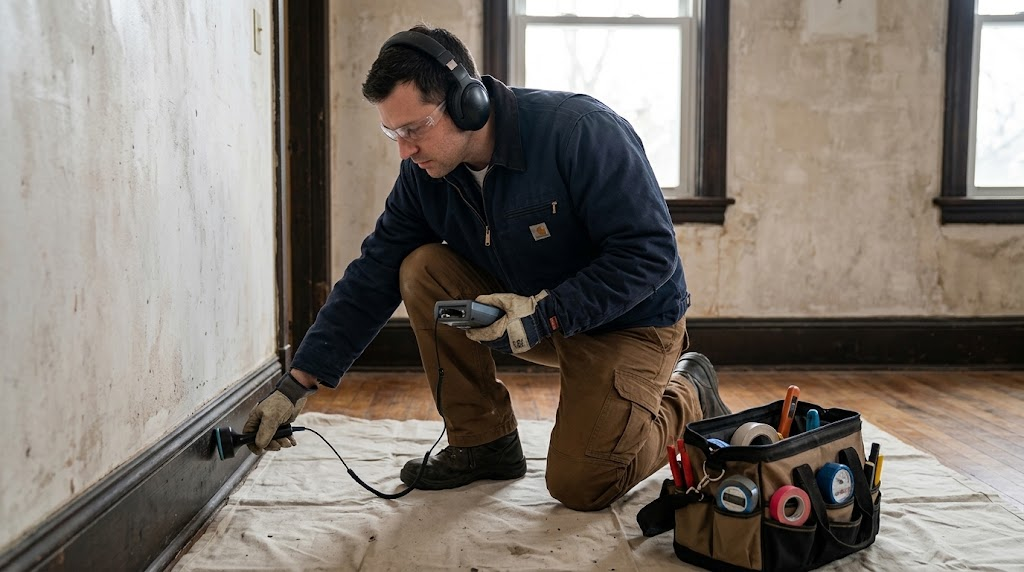
Tearing down drywall or breaking concrete flooring indiscriminately to find a leak is costly and unnecessary. Our technicians use advanced diagnostic equipment to pinpoint hidden water leaks with minimal disruption:
- Acoustic Listening Microphones: Pressurized water escaping through hairline cracks produces distinct acoustic sound frequencies. Ultra-sensitive ground microphones and probe sensors isolate this sound through concrete slabs and finished floors.
- High-Resolution Thermal Imaging: Infrared cameras detect subtle temperature differentials caused by evaporative cooling or hot water line escapes, revealing the exact path of wet drywall behind painted walls.
- Static Hydrostatic Pressure Testing: We isolate specific plumbing manifolds to determine whether the leak resides in the domestic cold supply, domestic hot water run, or hydronic boiler heating circuit.
Pipe Materials and Repair Techniques
Selecting the appropriate repair methodology depends directly on the pipe material and overall system condition:
Copper Pipe Repair
Copper lines subject to pinholes or freeze splits are cut back cleanly past the oxidized zone. We install new Type L copper piping joined with lead-free soldered fittings or heavy-duty ProPress mechanical crimp fittings rated for 200+ PSI.
Galvanized Iron Line Replacement
Vintage threaded galvanized steel pipes corrode from the inside out, accumulating thick rust nodules that choke water flow and cause brittle joint failures. We transition safely from steel to modern copper or PEX tubing using approved dielectric unions.
Localized Spot Repair vs. Section Repiping
During our on-site evaluation, our plumbers determine whether a targeted spot repair is appropriate or if a wider sectional replacement represents the wiser financial decision:
- Localized Spot Repair: If an isolated joint failed due to physical vibration, accidental nail puncture, or localized freezing in an otherwise sound copper water system, replacing the damaged 2-foot section is practical and cost-effective.
- Sectional Repiping: If inspection reveals widespread pitting, visible green oxidation on numerous fittings, or paper-thin pipe walls across the basement ceiling, repairing one leak will simply shift pressure stress to the next weakest joint. Replacing the line run eliminates ongoing repair cycles.
Stop Water Damage Quickly in Stapleton
Have an active pipe leak or unexplained water bill increase? Speak directly with our Staten Island plumbing repair technicians.
Call (315) 202-8009Frequently Asked Questions About Pipe Leak Repair
Immediately locate and close your home's main water shutoff valve, typically found where the municipal water service enters the basement wall or near the water meter. Once the main valve is shut, open cold and hot faucets on the lowest level of the house to drain remaining line pressure, protect nearby valuables, and call (315) 202-8009 for prompt professional repair.
We utilize non-invasive acoustic leak detectors, digital correlation microphones, and infrared thermal imaging cameras. Pressurized water escaping through hairline cracks generates high-frequency ultrasonic friction sounds and localized temperature anomalies, allowing our technicians to pinpoint the exact failure point without exploratory wall demolitions.
Pinhole leaks frequently occur due to localized pitting corrosion (pitting corrosion cell attack), aggressive water chemistry, excessive water velocity from undersized lines, or improper electrical grounding using plumbing pipes as an electrical earth ground, which induces stray electrical currents and galvanic reactions.
If a pipe failure is isolated to a physical freeze split, a mechanically damaged joint, or a puncture in otherwise thick, healthy copper or PEX tubing, replacing that individual section with a soldered or pressed union is completely reliable. If the pipe is vintage galvanized steel that has corroded internally or thin copper showing widespread green verdigris and oxidation across multiple joints, complete sectional repiping is the only lasting solution.